AI-designed bacteriophages worked in the lab. The caveats matter
Genome language models produced viable bacteriophages in a laboratory study. The result is promising, specific and inseparable from biosafety.
Subject: AI designed complete bacteriophage genomes—and 16 worked
Preview: Genome language models produced viable bacteriophages in a laboratory study. The result is promising, specific and inseparable from biosafety.
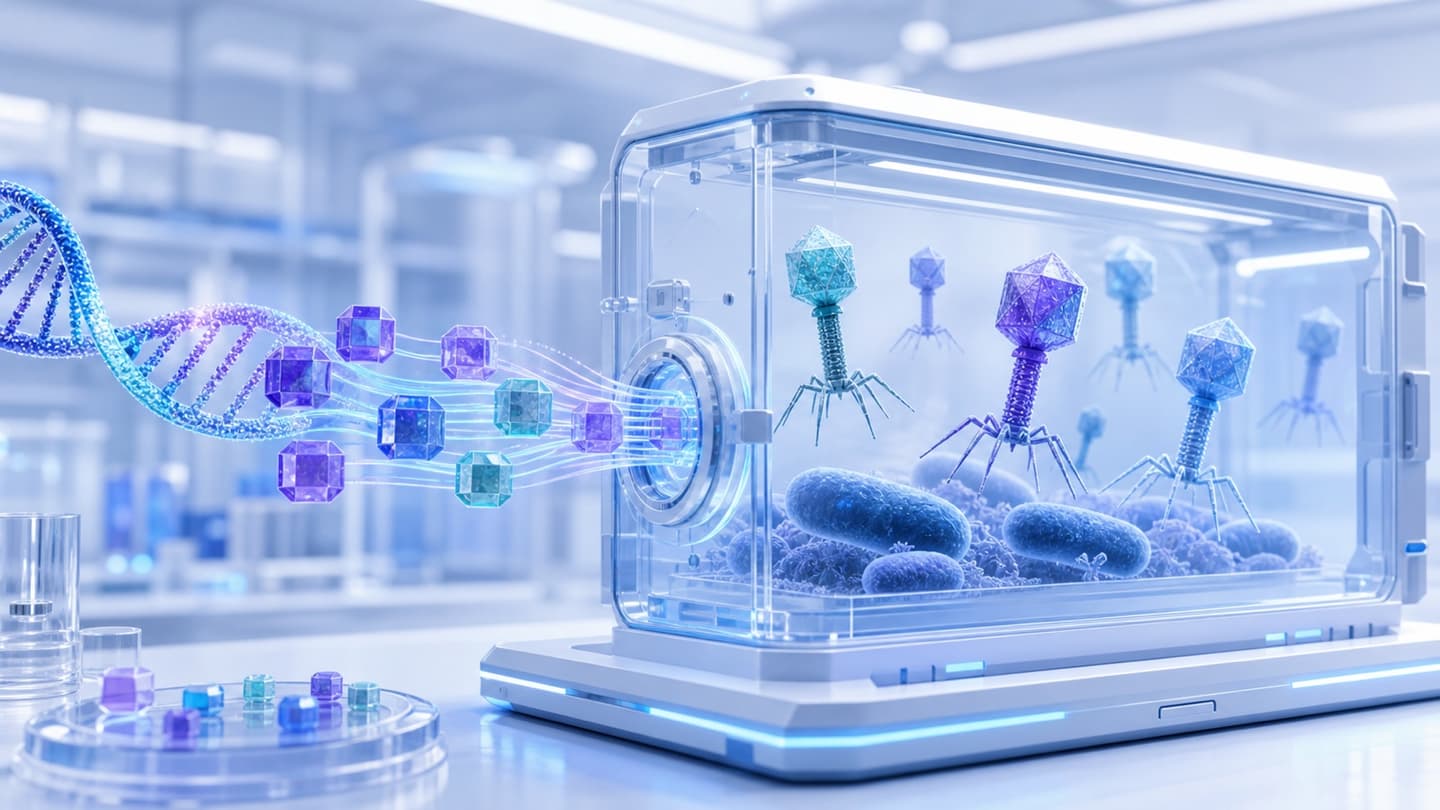
Researchers from Stanford University and the Arc Institute used the Evo 1 and Evo 2 genome language models to generate complete bacteriophage designs. Sixteen designs proved viable in laboratory testing. This is a meaningful research result, but “AI created life from scratch” is not an accurate description of what happened.
What happened
The team used the well-studied ΦX174 bacteriophage as a design template. Bacteriophages are viruses that infect bacteria; this work focused on phages targeting E. coli. The LinkedIn summary reports that researchers selected and synthesised 302 candidate designs, while the study reports 16 viable phages with substantial evolutionary novelty. Some experimental cocktails also overcame bacterial resistance better than the natural reference phages.
Why it matters
Antibiotic resistance makes targeted bacteriophage research increasingly relevant. Genome models could help scientists explore a much larger design space and propose candidates with desired host behaviour. The achievement also shows that generative AI can move from suggesting individual biological components to proposing complete, testable genomes.
What is easy to miss
The models did not manufacture organisms by themselves. Humans chose the template, filtered designs, synthesised DNA and performed the laboratory validation. The result concerns bacteriophages, not viruses designed to infect people. The original study first appeared as a preprint, so its claims and methods require the same scrutiny as other emerging research. Whole-genome generation is also dual-use technology and needs strong screening and access controls.
What to do next
Treat biological AI outputs as hypotheses, never as validated products. Require specialist review, documented sequence screening, approved laboratory protocols and traceability from model input to experimental result. Communicators should state clearly what was generated, what humans did and which organisms were tested.
The takeaway
AI can now propose complete biological designs that function in the laboratory. That expands scientific opportunity—and raises the standard for biosafety governance.
Sources
- Original postlinkedin.com
- Primary sourcedoi.org
- Primary sourcehai.stanford.edu
Last reviewed: · By Arnaud Llamas Bravo